National Core Arts Standards a Conceptual Framework for Arts Learning
Art teachers are experts at coming up with lesson plans that are creative and engaging. You may be required to align your lessons with state, national, or district standards. Understanding the National Core Arts Standards (NCAS) volition inform planning curriculum and education for your art program and gear up your students to exist lifelong learners.
Allow's explore the National Core Arts Standards together to meliorate equip u.s. as art teachers and our students as artists.
Before we jump in, here is a handy download that provides an overview of the standards. For more resources like this, cheque out the PRO Pack, Implementing the National Art Standards.

Download Now!
Implementing the NCAS encourages lifelong learning.
The National Core Arts Standards are aligned with the four artistic processes: Creating, Presenting, Responding, and Connecting. These processes build artistic literacy in your fine art students. The updated national standards focus on creating creative literacy to back up common values that connect the arts and lifelong learning. The National Cadre Arts Standards: A Conceptual Framework, or NCAS, recognizes that the arts serve to encourage "communication," "creative personal realization," cultural and historical sensation, relationships and connections, "wellbeing," and "community engagement." These are valuable life skills that go across the art room. We tin can plant the seeds at a young age through a quality arts instruction.
According to The Creative Literacy Establish, artistic literacy is "a human correct and a teachable skill. It is the ability to connect both personally and meaningfully to works of art and, through this process, to forge connections to our humanity and the humanity of others." When yous consider how you create those types of connections in your fine art room, you tin can use the national standards to strengthen your existing curriculum and dive deeper into the artistic procedure.
Strengthen the creative feel for all of your students by starting with these four processes.
Creating artwork or inspiring others to do the same may have led you lot into art pedagogy. When y'all engage in artmaking, you generate ideas, make meaningful connections, reflect, and mayhap share your piece of work with others. As you read almost each of the iv processes, recall about how your do of creating art aligns with the processes and how yous can help guide your students through them.
1. Creating
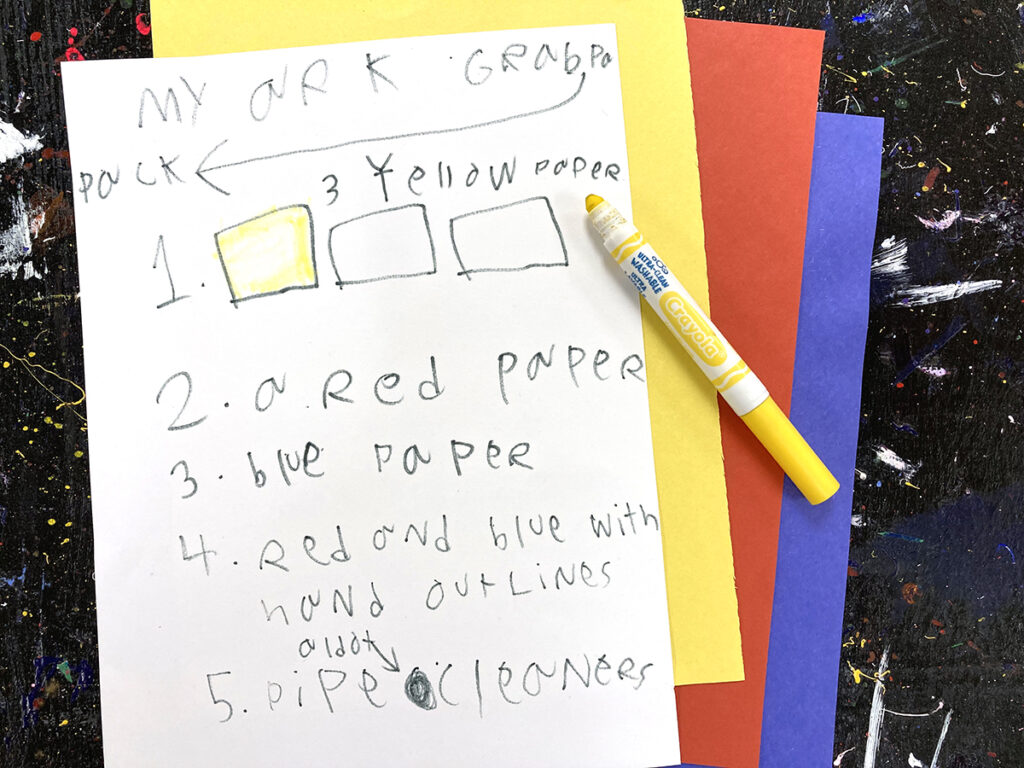
The procedure focused on Creating may be the ane matter (creating artwork) that most people acquaintance with visual arts. As art teachers, we know that a lot goes into the creation process. From coming up with ideas to completing the artwork, creating can cover it all.
There are iii anchor standards for Creating:
- Ballast Standard i: Generate and conceptualize creative ideas and work.
- Ballast Standard 2: Organize and develop artistic ideas and piece of work.
- Anchor Standard 3: Refine and complete artistic work.
What does Creating await like in the art room?
The National Core Arts Standards: A Conceptual Framework for Arts Learning defines Creating as "conceiving and developing new artistic ideas and work." The anchor standards listed above can guide you as you lot compose learning objectives aligned with the creative process. They are also expectations for what art teachers should look for in their students' learning. You tin can hands place phrases such every bit, "The students will" or "The students volition be able to" in front of each anchor standard and use information technology as a learning objective to assist y'all in lesson planning.
As yous begin planning your lessons, consider the definition of creating: "conceiving and developing new creative ideas and work." How are y'all already fostering original and meaningful thinking in your students? You lot may already be using brainstorming, writing prompts, creativity exercises, and offer themes and choices in subject matter to guide your students towards generating their own ideas. Developing those ideas into artwork involves exploring materials, media, and techniques. It is a good practice to periodically reflect on what strategies are in identify in your educational activity.
Planning artwork can include thumbnail sketches, boot camps, sketchbooks, or collaborative activities. Every bit your students piece of work through the creative process, a lot of reflection may need to happen for them to refine and complete their artwork. Reflection tin can occur at any point during the artistic process. Y'all can help your students reflect by having them participate in gallery walks, peer feedback, self-reflection, critiques, or evidence-and-tell manner presentations. Creating and reflecting may take many forms, and it tin can be helpful to have a stride back and write downward what these await similar in your art room.

2. Presenting
The national standard for Presenting artwork encompasses performing, presenting, and producing. When considering the definition of this standard, the NCAS emphasizes "realizing," "interpreting," and "presenting artistic ideas and work." Let's break down this standard and see what information technology means in the art room.
At that place are three anchor standards for Presenting:
- Anchor Standard 4: Select, analyze, and interpret artistic work for presentation.
- Anchor Standard 5: Develop and refine artistic techniques and work for presentation.
- Anchor Standard half-dozen: Convey significant through the presentation of artistic work.
What does Presenting look like in the fine art room?
Once the creative process begins, artwork has the potential to bring ideas from an internal thought to an external, visual class. Then the visual artwork is presented to the fine art instructor, peers, family, friends, or whoever the audience may be. Presentations can occur at any stage in the creation process. Fine art teachers can use presentations as learning experiences that are ongoing and reflective.
Presenting may naturally be connected to the physical display of finished artwork, but it is not limited to it. When you lot look at the anchor standards and even closer at the NCAS's Visual Arts at a Glance matrix, at that place are opportunities to learn virtually the role of presentation as it relates to art. Yous may teach about venues for an exhibition, including museums, local galleries, or your classroom display. Presenting provides opportunities to discover the relationships between artwork and storytelling, showing meaning and cultural illustrations of life and history. Some other avenue to explore is providing the space for student autonomy in the presentation of their own artwork. Including students in the decision-making procedure when showing their piece of work can be empowering.
3. Responding
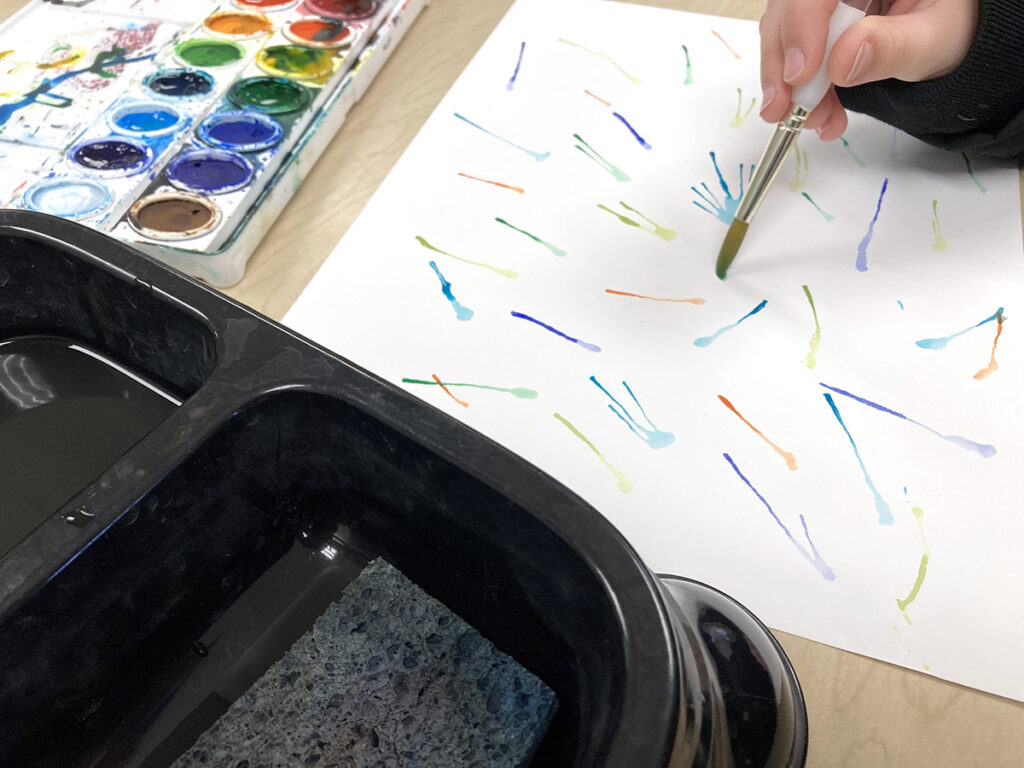
The National Core Arts Standards: A Conceptual Framework for Arts Learning states that the standard for Responding is "agreement and evaluating how the arts convey significant." Responding relies heavily on thinking and communicating. It is an excellent starting point to develop or proceed fostering creative and critical thinking skills.
There are 3 anchor standards for Responding:
- Ballast Standard 7: Perceive and clarify artistic work.
- Anchor Standard 8: Interpret intent and meaning in creative work.
- Ballast Standard 9: Apply criteria to evaluate artistic piece of work.
What does Responding look like in the art room?
Have yous always thought about how you can increase learning through constructive questioning and communication? When you look closely at the breakup of grade-level standards, you may notice the sprinkling of verbs linked to Bloom's Taxonomy. Y'all may already be using those higher-club thinking verbs every bit you write your learning objectives and collaborate with your students.
One common strategy you may be incorporating is critiquing artworks. Critiques come in a variety of forms and tin can be washed at different stages of the creative process. It is a neat way for students to self-appraise their own artwork and introduce them to the artwork of others. Critiques can exist formal, informal, diagnostic, formative, or summative activities. You can even create fun activities that are both entertaining and learning opportunities.
4. Connecting
When exploring the standard of Connecting, the National Core Arts Standards: A Conceptual Framework for Arts Learning defines information technology equally "relating artistic ideas and work with personal meaning and external context." You lot may tap into meaningful connections in your own artwork as an artist yourself. Considering of this, the creation process becomes engaging for you lot from commencement to stop. Through our own artmaking experiences, nosotros are expert guides at helping our students discover their own inspiration.
There are two anchor standards for Connecting:
- Anchor Standard x: Synthesize and relate cognition and personal experiences to make art.
- Anchor Standard xi: Relate artistic ideas and works with societal, cultural, and historical context to deepen understanding.
What does Connecting look like in the art room?
While Creating art with meaningful connections comes naturally for children, the traditional teacher-driven public educational activity organization may hinder creativity. Art teachers have the opportunity to teach inventiveness strategies and encourage skills that allow students to connect personal pregnant, ideas, and experiences with artmaking and artwork. The art room is the perfect place to cultivate an surroundings that fuels creativity, and the best office is, you can showtime right at present.
Making creativity a priority in your teaching and learning tin be the straight route to meeting the Connecting standard. Y'all tin plant a creativity routine that exercises the imagination. For example, you tin use prompts to bring awareness to your students' personal experiences. Teaching for creativity through the creative process can help students notice their own voices and express what is important to them. Brainstorming, timed thumbnail sketches, listen mapping, or collaborative activities can help students develop connections between personal ideas and visual artmaking.
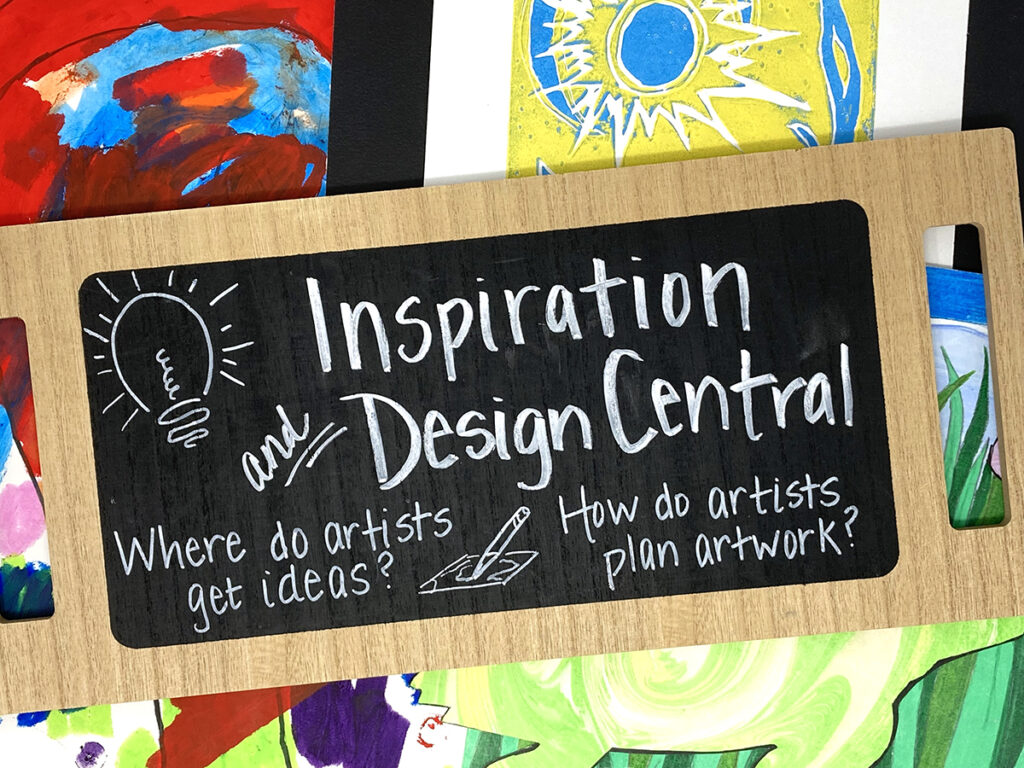
After reading the National Cadre Arts Standards breakdown, you lot may feel more than comfortable knowing that you are already practicing each of the processes and standards. Remember that y'all are an art teacher. You are familiar with the creative procedure and an expert at sharing your passion for artmaking with your students. Once you recognize this, you will find information technology easier to marshal your curriculum with the standards to guide your students' learning.
Listen to these additional resources:
- Heed to Exploring the National Standards: Create (Ep. 206)
- Listen to Exploring the National Standards: Respond (Ep. 207)
- Heed to Exploring the National Standards: Connect (Ep. 208)
- Listen to Exploring the National Standards: Present (Ep. 209)
National Core Arts Standards (2015) National Coalition for Core Arts Standards. Rights Administered by the Land Education Agency Directors of Arts Education. Dover, DE, world wide web.nationalartsstandards.org all rights reserved.
NCAS does not endorse or promote any appurtenances or services offered by the Art of Educational activity University.
What practise the national standards look like in your art classroom?
How tin yous incorporate innovative didactics and learning strategies to foster artistic literacy and lifelong learning?
What questions do you still accept about the National Core Arts Standards?
Mag articles and podcasts are opinions of professional teaching contributors and do non necessarily represent the position of the Fine art of Education University (AOEU) or its academic offerings. Contributors use terms in the way they are almost often talked almost in the scope of their educational experiences.
readysuccionoth56.blogspot.com
Source: https://theartofeducation.edu/2022/02/18/feb-what-does-unpacking-the-national-core-arts-standards-look-like/
0 Response to "National Core Arts Standards a Conceptual Framework for Arts Learning"
Post a Comment